
Dental Bone Grafting: When Is It Needed Before Dental Implant Surgery?
Missing teeth can affect chewing, speech, and the appearance of your smile. Dental implants offer a way to replace missing teeth, but successful implant placement requires adequate jawbone support. When the jawbone lacks sufficient volume or density, a dentist may recommend dental bone grafting before implant surgery.
Dental bone grafting helps rebuild or increase the amount of bone in a specific area of the jaw. This procedure may create a more suitable foundation for an implant, depending on the patient’s oral health and bone condition.
If you are considering dental bone grafting in Gurugram, Dr. Amit Yadav at Swastik Healthcare, Sector 31, Gurugram, can assess your dental condition and discuss appropriate treatment options.
What Is Dental Bone Grafting?
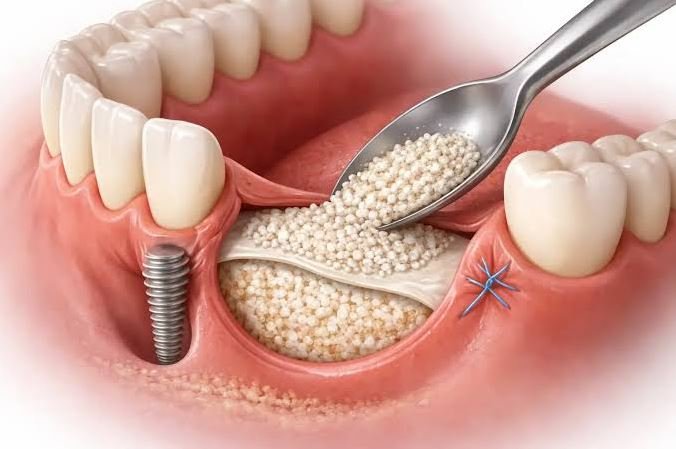
Dental bone grafting is a procedure that adds bone material to an area of the jaw where the existing bone is insufficient. The material acts as a framework that supports new bone growth as healing progresses.
The dentist may recommend bone grafting when a patient has lost bone around a missing tooth, has experienced damage from gum disease, or needs additional support before dental implant placement.
Over time, the grafted area may develop new bone. The amount of bone regeneration and the time required for healing vary according to the grafting technique, the patient’s health, and the condition of the jaw.
Why Is Jawbone Important for Dental Implants?
Dental implants are placed into the jawbone, where they gradually integrate with the surrounding bone. This process, known as osseointegration, helps provide stability for the replacement tooth.
When there is not enough bone to support an implant, placement may be difficult or unsuitable without additional treatment.
Adequate bone volume can help the dentist plan the implant’s position and support a stable restoration. However, bone quantity is only one part of the assessment. Gum health, oral hygiene, general health, and bite forces also influence treatment planning.
When Is Dental Bone Grafting Needed Before Implant Surgery?
Not every patient who needs a dental implant requires bone grafting. The dentist evaluates the jawbone and recommends grafting only when it is appropriate.
1. Bone Loss After Tooth Extraction
After a tooth is removed, the surrounding jawbone can gradually shrink because it no longer supports the natural tooth root.
If significant bone loss occurs, a graft may be recommended to help preserve or rebuild the area before implant placement.
2. Long-Term Missing Teeth
When a tooth has been missing for a long time, the jawbone in that area may become thinner or shorter.
A dental examination and imaging can help determine whether enough bone remains for an implant or whether bone augmentation may be necessary.
3. Bone Loss Due to Gum Disease
Advanced periodontal disease can damage the tissues and bone that support teeth. Even after an affected tooth is removed, the remaining bone may not provide enough support for an implant.
In selected cases, bone grafting may help rebuild the affected area after the infection and gum condition have been appropriately managed.
4. Insufficient Bone Width or Height
The jawbone must have suitable dimensions for the planned implant. If it is too narrow or lacks sufficient height, the dentist may recommend a graft to improve the available bone volume.
The type of graft depends on the location of the missing tooth and the amount of bone required.
5. Bone Defects or Dental Injury
An injury, infection, or previous dental procedure may leave a defect in the jawbone. Bone grafting may be considered if the defect affects the planned implant site.
What Are the Different Types of Dental Bone Grafts?
The choice of graft material depends on the patient’s needs, the location of the defect, and the treatment plan.
Autogenous Bone Graft
This type uses bone taken from another area of the patient’s own body. The dentist or oral surgeon selects this approach when appropriate for the specific case.
Allograft
An allograft uses processed donor bone from a tissue bank. It is prepared for medical use and can provide a framework for new bone formation.
Xenograft
A xenograft uses specially processed bone material from an animal source, commonly bovine bone. It can support bone regeneration in selected dental procedures.
Synthetic Bone Graft
Synthetic materials are designed to support bone regeneration. The dentist chooses a suitable material based on the defect and the planned procedure.
Each option has specific benefits and limitations. Your dental professional can explain which material is appropriate for your treatment.
How Is Dental Bone Grafting Performed?
The exact procedure varies according to the location and size of the area that needs additional bone.
Step 1: Dental Examination
The dentist examines your teeth, gums, and jawbone. Dental X-rays or a 3D scan, such as cone-beam computed tomography (CBCT), may be used to assess the bone and plan implant placement.
Step 2: Treatment Planning
The dentist determines whether grafting is needed and discusses the procedure, material options, expected healing period, and potential risks.
Step 3: Preparing the Treatment Area
The procedure is generally performed using local anaesthesia. The dentist accesses the area requiring treatment and places the selected graft material.
Step 4: Protecting the Graft
Depending on the procedure, a protective membrane may be placed over the graft. The area is then closed with stitches when required.
Step 5: Healing and Review
The grafted area is monitored during healing. Once the bone has developed sufficiently, the dentist determines whether the site is ready for implant placement.
In some cases, bone grafting can be performed at the same time as implant surgery. In others, a separate healing period is necessary.
How Long Does Bone Grafting Take to Heal?
Healing time depends on the size of the graft, its location, the material used, and the patient’s overall health.
Smaller grafts may heal sufficiently within a few months, while larger grafts can require a longer period before implant placement.
Your dentist will monitor the healing process and use clinical examination or imaging when needed to determine whether the bone is ready for the next stage.
Following aftercare instructions and attending scheduled appointments can help support recovery.
Is Dental Bone Grafting Painful?
Dental bone grafting is usually performed under local anaesthesia, which helps prevent pain during the procedure.
Afterwards, some swelling, tenderness, bruising, or mild discomfort may occur. These symptoms generally improve as healing progresses.
Your dentist may recommend appropriate pain relief and provide instructions about eating, brushing, and cleaning the treated area. Contact your dental professional if pain or swelling becomes severe, increases instead of improving, or is accompanied by fever or other concerning symptoms.
What Are the Benefits of Dental Bone Grafting?
When appropriately indicated, bone grafting may offer several benefits.
- Improved bone volume: It can increase the amount of bone available at the implant site.
- Support for implant planning: It may help create a more suitable foundation for implant placement.
- Reconstruction of bone defects: It can help rebuild selected areas affected by bone loss.
- Support for long-term restoration: Adequate bone may help the dentist plan a stable implant-supported replacement tooth.
- Preservation of oral function: Successful implant treatment can help restore chewing function and replace a missing tooth.
Bone grafting does not guarantee successful implant treatment. The outcome also depends on healing, gum health, oral hygiene, implant planning, and other individual factors.
Are There Any Risks Associated With Bone Grafting?
As with any surgical procedure, dental bone grafting has potential risks. These may include infection, bleeding, swelling, discomfort, exposure of the graft material, or incomplete bone regeneration.
The risks vary according to the procedure and the patient’s health. Smoking, uncontrolled medical conditions, and poor oral hygiene may affect healing.
Your dentist should explain the expected benefits, limitations, and risks before treatment. Follow all postoperative instructions and attend follow-up appointments to monitor recovery.
What Should You Eat After Dental Bone Grafting?
Choosing suitable foods can help protect the treated area during early healing.
Your dentist may recommend:
- Soft foods such as yoghurt, mashed vegetables, and soft eggs.
- Cool or lukewarm foods that do not irritate the surgical site.
- Adequate fluids, while following any specific instructions provided.
- Avoiding hard, crunchy, sticky, or very hot foods during the recommended recovery period.
- Avoiding chewing directly on the treated area until your dentist says it is safe.
Do not disturb the grafted area with your fingers or tongue. Follow your dentist’s instructions about brushing, rinsing, and cleaning around the surgical site.
Dental Bone Grafting Before Implants in Gurugram
If you are planning to replace missing teeth with dental implants, an assessment of your jawbone can help determine whether additional bone support is needed.
At Swastik Healthcare, Sector 31, Gurugram, Dr. Amit Yadav provides dental consultations for missing teeth and restorative treatment planning. Patients seeking dental implant treatment in Gurugram can discuss their oral health, available options, and whether further assessment or specialist care is needed.
The appropriate plan depends on the condition of the jawbone, the location of the missing tooth, and the patient’s overall dental health. When a bone graft is required, the dentist can explain the recommended approach and expected healing stages.
Conclusion
Dental bone grafting may be needed before implant surgery when the jawbone does not provide enough volume or support for the planned implant. Bone loss after extraction, advanced gum disease, long-term missing teeth, and certain injuries can contribute to this problem.
Not every patient requires a bone graft, and some patients can receive an implant without a separate grafting procedure. A dental examination and appropriate imaging help determine the most suitable approach.
If you are considering dental bone grafting in Gurugram, consult Dr. Amit Yadav at Swastik Healthcare, Sector 31, to discuss your dental condition and treatment options. Proper planning, good oral hygiene, and regular follow-up can help support healing and successful restorative care.
Frequently Asked Questions
1. Is bone grafting always necessary before dental implants?
No. Bone grafting is recommended only when the available jawbone is insufficient for the planned implant or when bone reconstruction is otherwise needed.
2. How long after bone grafting can I get a dental implant?
The waiting period varies according to the graft size, location, and healing progress. Some cases require several months before implant placement, while others may allow grafting and implant placement during the same procedure.
3. Can bone grafting be performed after a tooth extraction?
Yes. A dentist may perform socket preservation at the time of extraction or recommend a later graft if additional bone is needed for implant treatment.
4. Is dental bone grafting safe?
Bone grafting is a commonly used procedure when clinically appropriate. However, it carries risks, including infection and incomplete healing. Your dentist will assess your health and explain the risks before treatment.
5. Does dental bone grafting hurt?
Local anaesthesia is generally used during the procedure. Mild swelling, tenderness, and discomfort may occur afterwards and can usually be managed according to your dentist’s instructions.
6. Where can I get dental bone grafting advice in Gurugram?
You can consult Dr. Amit Yadav at Swastik Healthcare, Sector 31, Gurugram, for an assessment of missing teeth and guidance on dental implant planning. If advanced grafting or specialist surgical care is needed, an appropriate referral may be recommended.